
What Running a Small Business Taught Me About Product Design
Designing Beyond the Brief
Running a small design-focused eCommerce business has a way of stripping away theory.
There’s no buffer between you and reality. No roadmap document. No product manager handing you a well-defined brief. No research team delivering a neat slide deck of user insights.
Instead, you have customers. Real ones.
They show up with specific tastes, questions, frustrations, and expectations. They buy things. They abandon carts. They message you at 10:30 p.m. asking if a product can be customized. Sometimes they love what you made. Sometimes they tell you exactly why something didn’t work.
When it’s your business, every one of those signals matters.
Over time, I realized something interesting. The skills I was developing while running my business were the same ones great product designers rely on every day. Understanding users. Iterating quickly. Balancing creativity with practical goals. Learning from feedback.
Later, when I formally discovered human-centered design and UX, many of the ideas felt surprisingly familiar.
Running a business had already been teaching me the fundamentals.
Here are a few of the lessons that continue to shape how I approach product and UX design today.
Design for Humans, Not Personas
One of the first lessons running a small business teaches you is this: you cannot design for a vague, imaginary audience.
You have to know your customer.
Not in a theoretical persona-on-a-slide kind of way, but in a very real sense. Who are they? What do they care about? What are they trying to express about themselves?
In my case, my audience tends to be millennial customers who grew up immersed in alternative music and culture. Rock, punk, emo, goth. People who may have grown up, started careers, and taken on adult responsibilities, but never felt the need to trade their personality for mainstream aesthetics.
They know who they are. They just want products that reflect it.
Once you understand that, design decisions become clearer. Color palettes, typography, messaging, and even product categories start to align naturally with the people you are designing for.
Steve Jobs famously said, “You’ve got to start with the customer experience and work backwards to the technology.” The same principle applies to product design. If you start with what the user actually values, the rest of the design becomes much easier to navigate.
This lesson feels even more important now that we live in a world saturated with AI-generated content.
AI can produce a lot of things quickly. But it cannot replace empathy. It cannot understand cultural nuance, personal identity, or the subtle reasons people feel drawn to certain products.
Staying human in the design process matters.
When you understand your users deeply, you stop guessing. You start making informed decisions that feel intentional. And more often than not, your users notice.
Iteration Beats Perfection
Running a small business quickly teaches you that perfection is the enemy of progress.
If you wait until everything is flawless before releasing something, you will move far too slowly. Instead, you learn to iterate.
A lot.
In product design, we often talk about MVPs, minimum viable products. In practice, this mindset shows up everywhere in a small business environment.
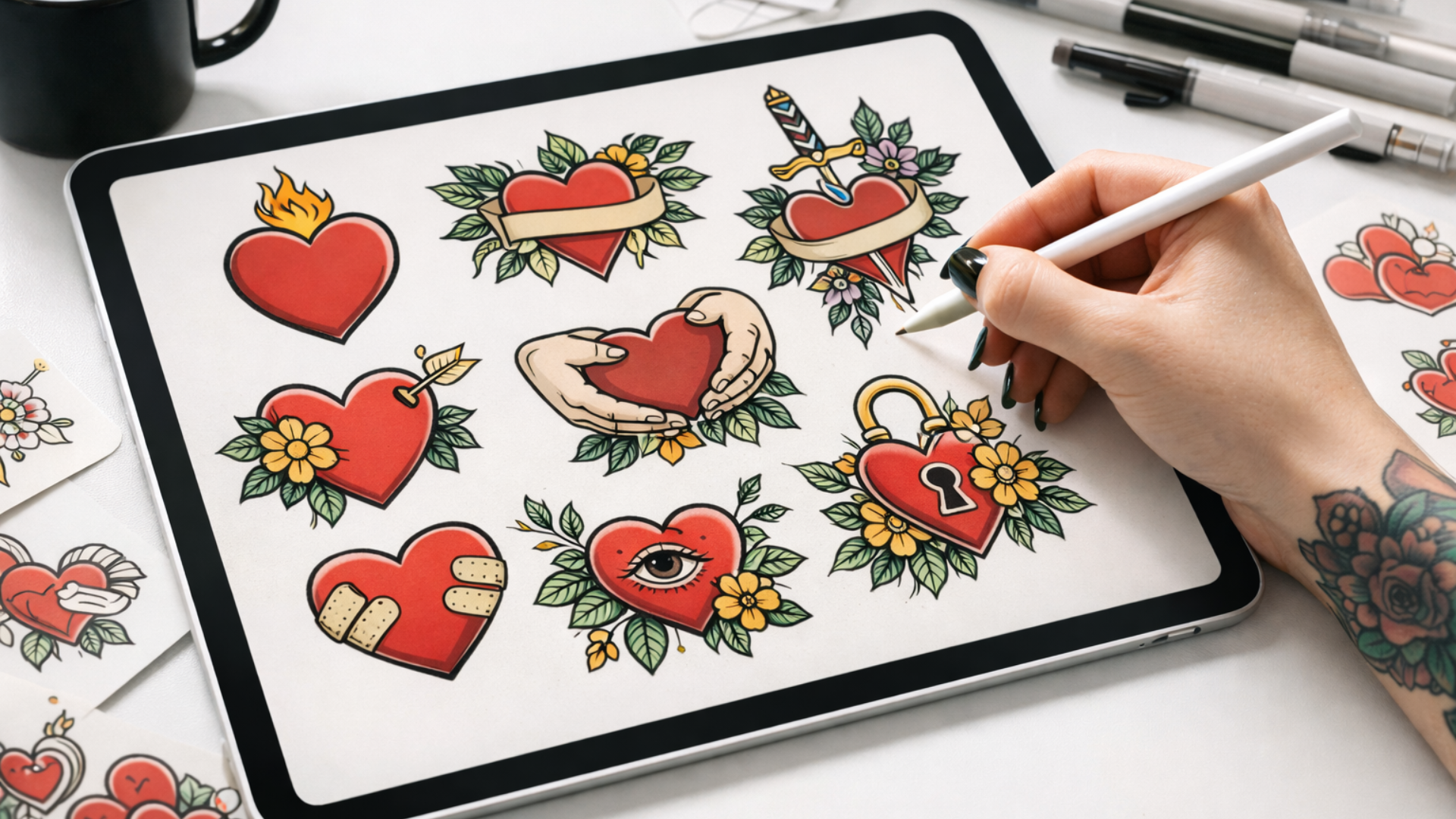
Sometimes it means launching a product idea quickly to see how customers respond. Sometimes it means expanding on designs that are already resonating with customers. If one concept performs well, it often makes sense to explore variations, new product formats, or related collections.
You learn to treat the market like a feedback engine.
For example, if a particular design performs well, it may evolve into a broader collection. Related products might appear. Complementary versions might be created for different audiences. Over time, a single idea can expand into an entire ecosystem of offerings.
Iteration also happens at a micro level.
When I’m creating visual assets for products, I often go through multiple rounds of small adjustments. Tweaking spacing. Refining typography. Adjusting layout balance. It’s the same iterative instinct every designer knows well.
Designers like to joke that our real hobby is overthinking fonts. There is some truth to that.
But those small refinements matter. Often the difference between “good enough” and “that looks right” is a handful of subtle adjustments that improve clarity, balance, or emotional impact.
Iteration also requires organization and prioritization. When you’re managing many moving parts, it becomes essential to focus on what will create the most impact. Not everything deserves the same level of attention.
Good designers know when to explore deeply and when to move forward.
Creativity Meets Strategy
Creativity is one of the most rewarding parts of design.
But running a business quickly reminds you that creativity alone is not enough.
Design needs a purpose.
A beautifully designed product that nobody wants to buy is not a success. A clever interface that does not solve a real problem is just decoration.
When you are responsible for both the creative work and the outcome, the relationship between creativity and business goals becomes very clear.
Innovation works best when it serves something meaningful.
In product design, that often means aligning three forces:
User needs
Business objectives
Technical feasibility
When those three overlap, you get solutions that are both valuable and sustainable.
About 35% of new products fail due to a lack of market need (CB Insights, 2021). In other words, they were built without strong evidence that users actually wanted them.
That lesson becomes very tangible when you are running a business.
You learn to pay attention to signals. What customers respond to. What they ignore. What they request repeatedly.
Creativity becomes more strategic.
For example, if my customers consistently respond positively to a particular style or theme, it makes sense to build on that momentum. New ideas are still welcome, but they are guided by what users have already shown they value.
This doesn’t stifle creativity.
It focuses it.
Constraints often lead to stronger design decisions. Instead of chasing novelty for its own sake, you start exploring ideas that meaningfully connect with real people.
Mind the Feedback Loop
One of the most valuable things about running a business is how immediate the feedback can be.
Every day, you are surrounded by signals.
Analytics tools show you what customers are clicking on, what they search for, and what ultimately leads to purchases. These patterns reveal behavioral insights that would be difficult to capture otherwise.
At the same time, qualitative feedback provides context behind those numbers. Customers message with questions. They leave reviews. They request customizations. They sometimes point out issues you never noticed.
Each interaction is a tiny piece of user research.
Over time, patterns start to emerge.
Quantitative signals tell you what is happening. Qualitative feedback helps explain why.
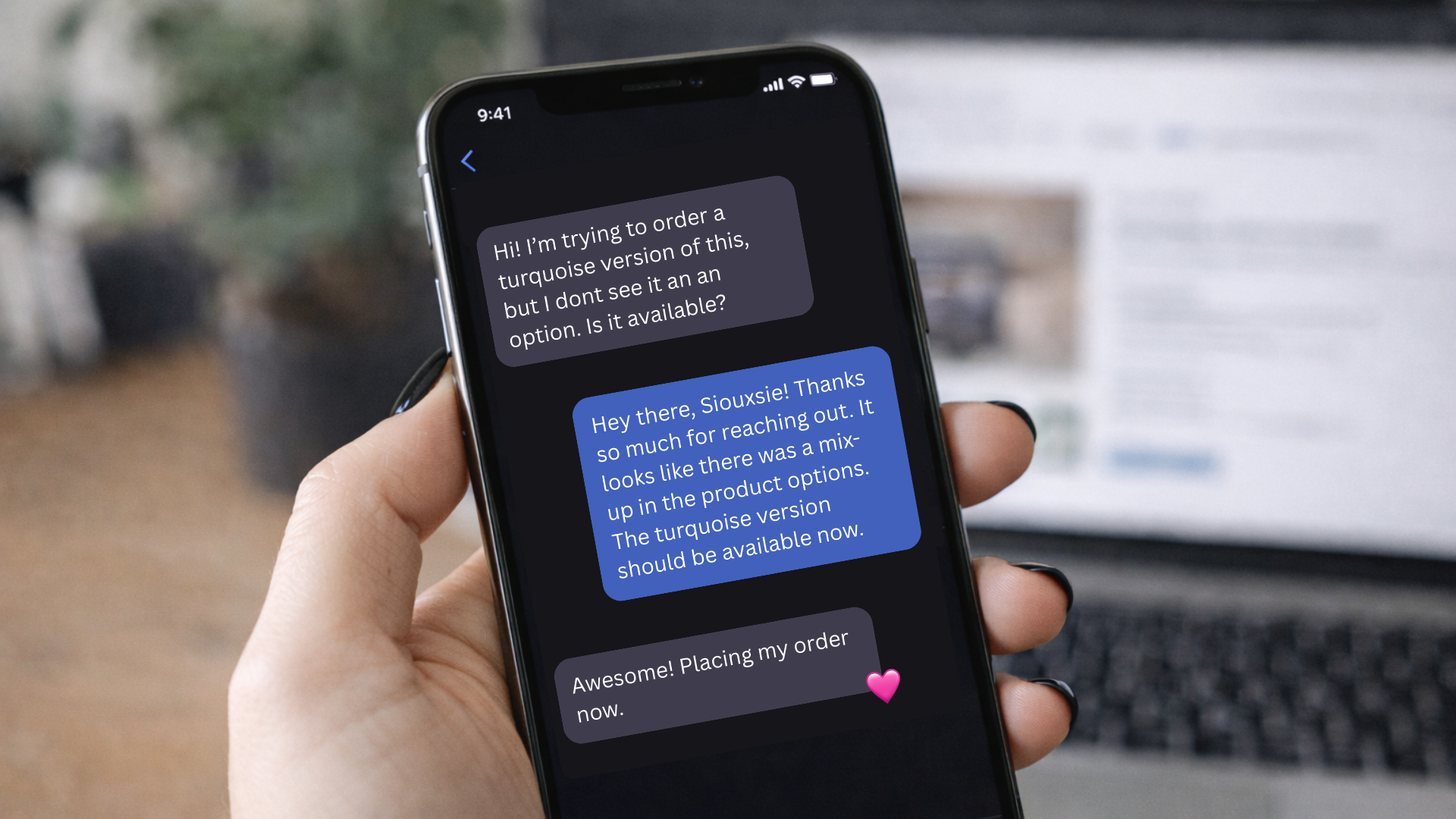
For example, a recent customer reached out to me with confusion about a missing configuration option while trying to select a specific product variation. It turned out that a small oversight in the product specification flow was creating friction.
After identifying the issue, I updated the configuration options to make the choice more clear. I followed up with the customer to let them know the issue had been fixed. They placed their order that same day.
Moments like that show how powerful feedback loops can be.
The key is creating an environment where feedback is welcome. Clear communication, transparency about the process, and a friendly tone all help encourage users to speak up when something feels off.
In product design, feedback loops are essential for continuous improvement. The earlier you can detect confusion or friction, the faster you can fix it. And the better the overall experience becomes.
Curiosity Didn’t Kill Anything
Running my small business has been one of the most practical design educations I could have asked for.
It has taught me how to think about real users instead of hypothetical personas. It pushes me to iterate quickly and stay adaptable. It forces me to balance creativity with measurable outcomes. And it shows me how valuable feedback can be when you truly listen.
Great design is not just about aesthetics or clever ideas. It is about understanding people, solving meaningful problems, and continuously improving based on what you learn.
In other words, it is about staying curious.
And occasionally, yes, spending an unreasonable amount of time adjusting fonts.
Want to continue the conversation? Let’s connect on LinkedIn or shoot me a message here!